
Hair thinning can sneak up quietly, sprouting anxiety with every stray strand. Yet for those watching their hairlines recede or crowns thin, innovation in noninvasive hair restoration offers new hope. Among these advancements, combining platelet-rich plasma (PRP) therapy with laser treatments is gaining traction as an effective approach for both men and women.
Understanding Hair Loss: Challenges and Realities
Hair loss is rarely a one-size-fits-all problem. While some people notice diffuse thinning, others contend with obvious bald patches or receding temples. Genetics is often the underlying culprit, but stress, hormonal shifts, and even nutritional deficiencies can accelerate the process.
Treatments that target existing follicles hold the most promise. This is why, no matter how transformative a therapy may be, it cannot conjure hair where follicles no longer exist. Early intervention, therefore, is key. Catching hair loss before significant follicle destruction is vital for optimal results.
What Is PRP Therapy and How It Supports Hair Growth
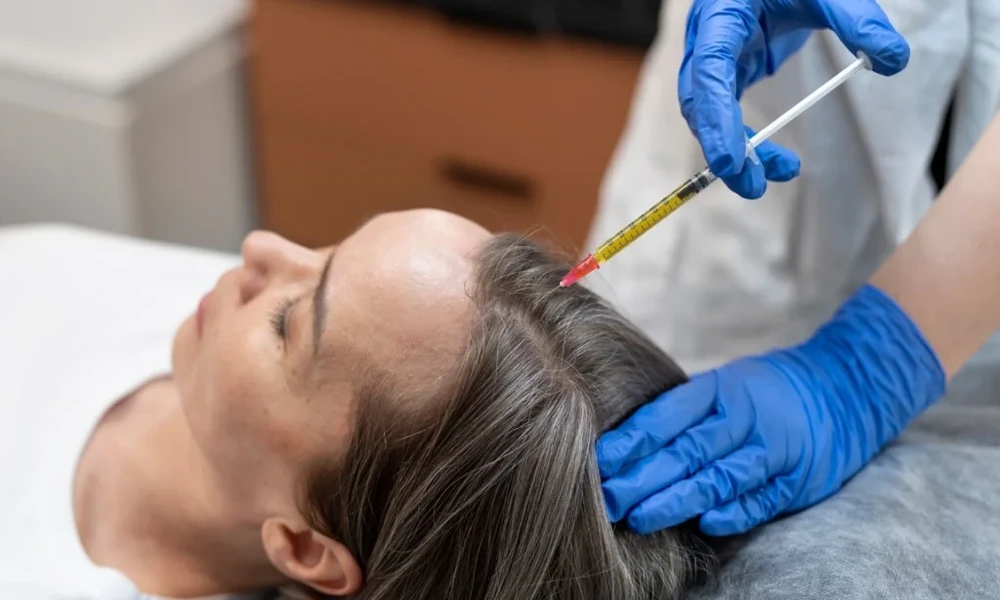
PRP therapy leverages the body’s innate healing potential. After drawing a vial of your blood, clinicians use a centrifuge to separate plasma rich in platelets. This “liquid gold” is loaded with growth factors such as IGF, FGF, EGF, and KGF. When injected into thinning areas of the scalp, these growth factors surround hair follicles and essentially jump-start their regenerative processes.
The actual procedure is quick, typically lasting about ten minutes. A series of tiny injections delivers the PRP directly to the scalp, focusing on areas with existing, yet weakened, follicles. Over time, patients often notice improvements in both hair thickness and overall density.
Laser Therapy: Awakening Dormant Hair Follicles
Laser therapy works differently but complements PRP remarkably well. Devices like the Erbium Yag Fotona laser use controlled heat to stimulate the scalp without damaging skin. This gentle energy increases blood flow, strengthens capillaries around follicles, and can “wake up” dormant hair-producing cells.
Sessions are comfortable and require no anesthesia. Patients usually report little to no discomfort, and each session takes around thirty minutes. While the laser alone can enhance hair growth, its synergy with PRP is where the true magic happens.
Case Study: Combining Laser Therapy with PRP for Superior Results
Imagine a patient in the early stages of thinning hair, a perfect candidate for combination therapy. The protocol often involves alternating PRP injections and laser sessions, sometimes spaced two weeks apart, over a three-to-four-month period.
In clinical observations, this dual approach has led to measurable increases in hair density and thickness. Patients describe hair that feels fuller, looks healthier, and continues to improve after each cycle. Notably, women often respond more robustly than men, likely due to hormonal differences.
Why the Combination Works: Synergy Explained
The intersection of laser therapy and PRP is not coincidental. Lasers stimulate local circulation and tissue growth factors, priming the scalp for PRP’s nutrient-rich boost. This enhanced microenvironment allows the growth factors in PRP to penetrate more deeply and work more effectively, maximizing follicle nourishment.
By attacking the problem from two directions, stimulating blood flow and delivering potent growth factors, this paired treatment rejuvenates hair follicles more vigorously than either method alone. For those curious about reputable options, exploring the Clinique Anti Aging prp hair treatment provides insights into how this synergy is practiced by experts.
Maintenance and Long-Term Care
The journey to fuller hair does not end with the initial round of treatments. Maintenance is critical: most clinics recommend follow-up sessions every three to four months, customized based on response. Complementary therapies, including vitamin injections or compounded topical medicines, may also be incorporated for further support.
Managing expectations is essential. While the combination offers impressive results for many, it will not reverse advanced baldness or recreate lost follicles. Still, for those with existing hair seeking to slow, halt, or even reverse thinning, this approach is among the most promising available.
Who Benefits Most from Combined PRP and Laser Treatments?
Women generally see better outcomes, thanks largely to lower testosterone levels and more diffuse patterns of hair loss. Men, however, can achieve excellent results if they begin treatment during early thinning, before follicle loss becomes permanent.
Ultimately, early intervention is the dividing line between modest and dramatic improvement. The longer hair loss is left unaddressed, the fewer viable follicles remain to respond to therapy.
Addressing Concerns and Myths
Safety is a frequent concern, but both PRP and laser therapy are minimally invasive with almost no downtime. PRP uses your own blood components, eliminating the risk of allergic reactions. Unfounded myths remain, such as the belief that these treatments can regrow hair on a completely bald scalp. In reality, their power lies in rejuvenating, not resurrecting, hair follicles.
Personalized care is the foundation of success. Experienced clinics tailor protocols to each patient’s unique needs, ensuring both safety and the highest chance of visible results. By combining cutting-edge techniques, the future of hair restoration has never looked fuller.

Comments are closed.